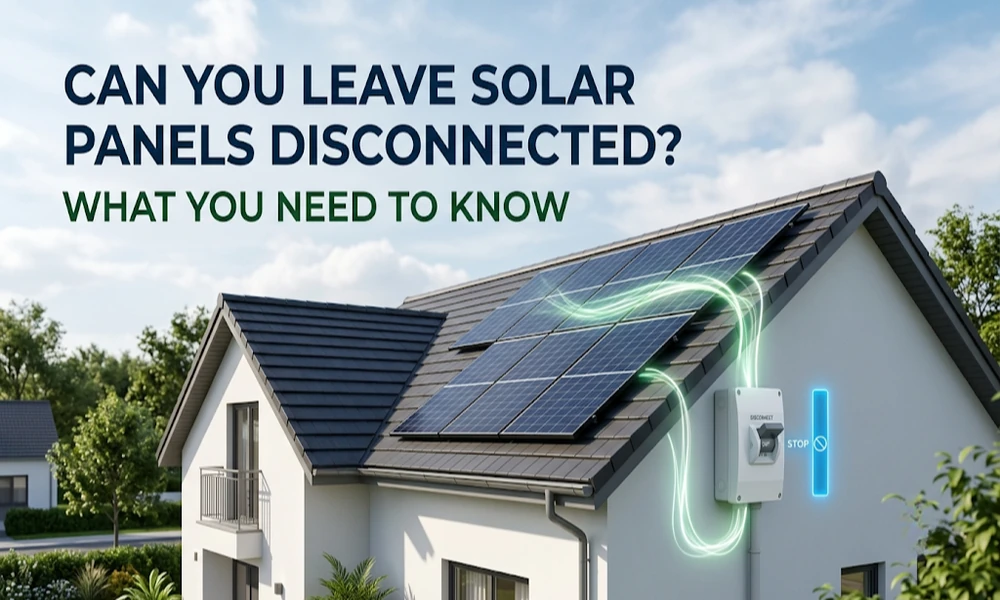

A lot of solar owners eventually ask this same thing: is it fine to just disconnect the panels, say while travelling for months, during cleaning solar panels, or if a module breaks? Turns out there’s more to it than a simple yes or no.
How a Solar System Actually Works
Panels turn sunlight into electricity using silicon-based cells. What comes out is DC power, and since homes run on AC, an inverter steps in to convert it. From there, the electricity passes through a meter that tracks generation, then either powers your home directly or returns to the grid.
So, Can You Actually Disconnect Them?
You can, technically. Nothing stops you from switching it off and walking away. But there’s a catch worth knowing. Even sitting idle and disconnected, a panel still produces voltage the moment sunlight hits it, and that energy needs somewhere to go. Usually it just turns into heat and dissipates fine on its own, but leave it unchecked long enough, and it can become a genuine fire hazard.
If you’re heading out of town for a while, honestly, keeping the system connected to the grid makes more sense. It keeps exporting power the whole time you’re gone, so you’re still earning credits instead of just losing out on months of generation for no reason.
Cleaning is a different situation though. For a typical rooftop setup, switch the system off first, clean it properly, then turn it back on once you’re done. And if a panel actually breaks, don’t try fixing it yourself; call your installer and let them handle the diagnosis and replacement the right way.
Understanding AC and DC Disconnects
Most systems come with two disconnect points. The DC isolator sits between the panels and inverter, sometimes built right into the inverter itself, and it cuts off DC before it gets converted. The AC isolator comes after the inverter, usually mounted near your meter outside, and handles cutting off AC flow when needed.
These aren’t just extra parts either. They matter during emergencies, letting you shut things down fast in case of fire, protecting your setup during storms or flooding, and giving utility crews a safe way to disconnect your system when they’re doing grid work nearby. A lot of newer electrical codes now require rapid shutdown capability too, for exactly these reasons.
Choosing the Right Disconnect Switch
Sizes vary quite a bit, anywhere from 30A up to 800A, so this isn’t something to guess at. It depends on your system’s voltage, how much load runs through your circuits, and your wiring setup. Get this wrong, and it can affect both safety and how well your system performs, so it’s really worth having an experienced installer handle this part.
Among solar power panel manufacturers in India, Waaree has spent decades building systems designed with exactly this kind of safety in mind. With over 25.8 GW in manufacturing capacity and installers stationed across the country, Waaree helps homeowners pick the right components so their system stays both safe and efficient for the long haul.